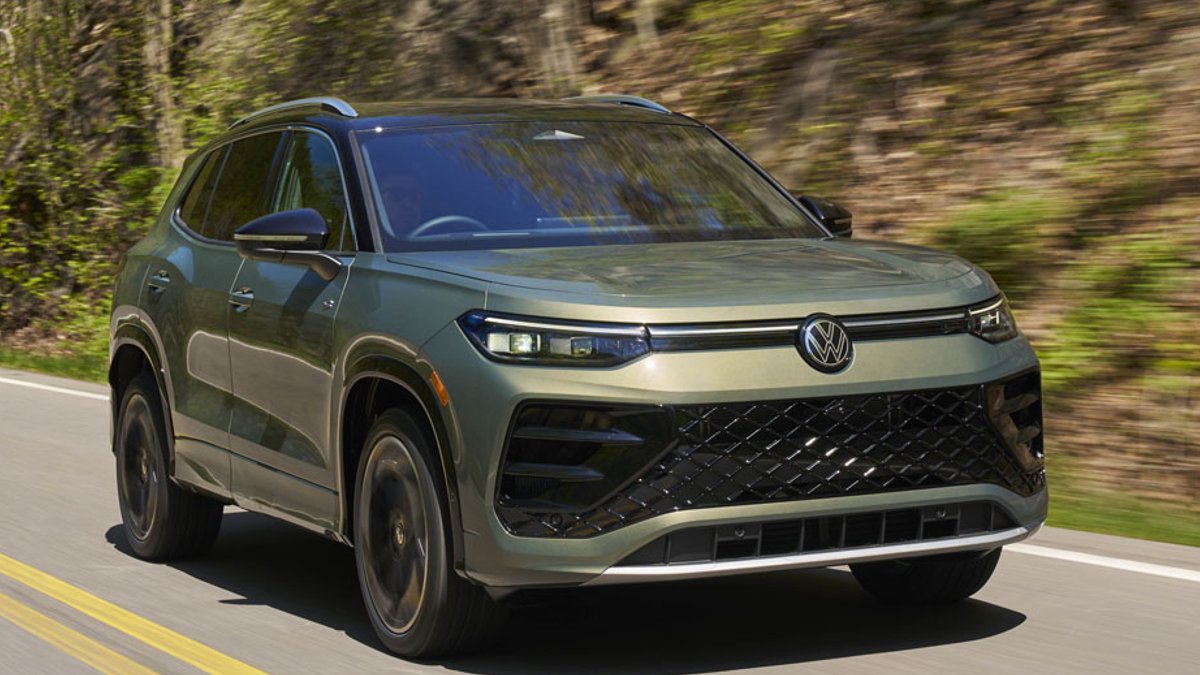
The 2027 Volkswagen Tiguan introduces subtle refinements to the third-generation model, which launched in 2025 after a complete redesign. This year’s model features two standout updates: an upgraded backup and surround-view camera system with higher resolution, and the inclusion of Auto Hold, which maintains the vehicle’s position at stops, freeing drivers from holding the brake pedal. Outside these changes, the Tiguan carries forward the same core elements as the 2026 model, including its 2.0-liter turbocharged four-cylinder engine options, a 12.9-inch Digital Cockpit Pro display, and the third-generation platform that originally expanded interior dimensions and added feature enhancements at launch.
Pricing Structure and Dealer Costs
The 2027 Tiguan’s manufacturer’s suggested retail price (MSRP) spans from $31,205 to $43,085 before destination fees. The lineup consists of seven configurations across four trims: S, SE, SE R-Line Black, and SEL R-Line Turbo. Most models come standard with front-wheel drive (FWD), while 4MOTION all-wheel drive (AWD) adds $1,500 to the MSRP on the three lower trims. The SEL R-Line Turbo is the sole trim available exclusively with AWD.
Dealer invoice prices—the amount Volkswagen pays dealers—vary by configuration. The S FWD starts at $29,957, while the SEL R-Line Turbo comes in at $41,362. These figures represent the upfront profit before holdback, a quarterly dealer payment from Volkswagen that further reduces their effective cost per vehicle. After accounting for holdback, dealer profit per Tiguan typically ranges between $1,800 and $2,500, depending on the trim. While these margins are narrower than those of some rivals—such as the Honda CR-V or Toyota RAV4—Volkswagen’s extensive dealer network in major U.S. markets allows buyers to negotiate better pricing by comparing offers.
Extended Warranty Protects Early Ownership Costs
This warranty protects against defects in materials and workmanship, reducing out-of-pocket repair costs during the first four years. The powertrain warranty extends to 5 years or 60,000 miles, covering major engine and transmission components beyond the bumper-to-bumper period.
Volkswagen also offers 4 years of roadside assistance with no mileage restrictions, ensuring coverage for breakdowns or flat tires regardless of how many miles are driven. These warranty terms help lower total ownership costs by minimizing unexpected expenses early in the vehicle’s life.
Engine Options and Platform Efficiency
The base 201-horsepower unit, standard on the S, SE, and SE R-Line Black trims, delivers 207 lb-ft of torque and works with an 8-speed automatic transmission. Fuel economy ratings for FWD models range from 26 city / 35 highway / 29 combined mpg on the S trim to 28 combined mpg on other FWD configurations. AWD versions of this engine achieve 26 combined mpg. This powertrain suits buyers who prioritize fuel efficiency, lower operating expenses, and everyday driving performance, though it does not match the acceleration of more powerful compact SUVs.
The SEL R-Line Turbo, the top-tier trim, switches to a 268-horsepower version of the same engine, producing 258 lb-ft of torque. This engine pairs exclusively with 4MOTION AWD and provides significantly quicker acceleration under full throttle. Fuel economy for the AWD Turbo drops to 24 city / 30 highway / 26 combined mpg, reflecting its added weight and power. The $1,440 invoice premium for AWD, compared to the $1,500 MSRP difference, makes it a practical choice for buyers in snowy or wet climates, though the system lacks off-road capability.
Standard Tech Matches Rivals’ Feature Lists
Across all trims, the Tiguan includes a standard feature package that competes with many rivals. Every model receives the 12.9-inch Digital Cockpit Pro, Front Assist (autonomous emergency braking and pedestrian detection), Adaptive Cruise Control with Travel Assist, Park Distance Control, Auto Hold, heated front seats, an 8-inch infotainment touchscreen, and wireless Apple CarPlay and Android Auto. The 2027 update replaces the standard backup camera with a higher-resolution version and adds surround-view cameras where equipped.
The S FWD trim starts at $29,957 and delivers the core Tiguan experience, safety technology, Digital Cockpit Pro, and heated seats, without leather or premium upgrades. It serves as the most budget-friendly entry point for buyers seeking the Tiguan’s space and standard driver aids without additional costs. The SE, priced at $32,635 (FWD) or $34,075 (AWD), adds leatherette seating, a 10.25-inch touchscreen, a power liftgate, 19-inch wheels, a panoramic sunroof, and a heated steering wheel. This trim offers the best balance between cost and features, making it the most appealing option for average buyers.
The SE R-Line Black builds on the SE with blacked-out styling, including the grille, badges, mirrors, wheels, and headliner, but retains the same 201-horsepower engine and feature set. It targets buyers who prefer a bolder appearance without the expense of the SEL R-Line Turbo. The SEL R-Line Turbo, starting at $41,362, is the only model with the 268-horsepower engine, standard AWD, and premium upgrades such as a 15-inch touchscreen, head-up display, Harman Kardon audio, and ventilated front seats. It also offers the most negotiating flexibility in the lineup, with a $1,723 front-end margin before holdback.
The Tiguan’s 4MOTION AWD system employs a Haldex clutch coupling, distributing torque to the rear wheels proactively rather than reacting to wheel slip. In practice, this enhances traction in light snow, wet pavement, and low-grip conditions, though it is not designed for serious off-roading. The SUV’s ground clearance and platform restrict it to light unpaved surfaces regardless of drivetrain selection. For buyers in Sun Belt climates or mild-weather regions, FWD delivers the same interior and features at a lower cost, along with a slight fuel economy advantage (28–29 mpg combined versus 26 mpg for AWD).
Space and Cargo for Daily Use
The Tiguan’s interior space remains a key strength. With 69.8 cubic feet of cargo capacity behind the second row when folded, it holds its own in the compact SUV segment. Behind the upright seats, the space accommodates groceries, weekend luggage, or family items, though it is not a seven-passenger vehicle. Buyers needing a third row should consider the Volkswagen Atlas, which offers greater cargo room and additional seating.
The 2027 Tiguan can tow up to 1,800 pounds, suitable for small trailers, lightweight watercraft, or compact campers. However, this rating is insufficient for regular towing of larger loads. Owners requiring higher tow capacity should look to body-on-frame SUVs or the Atlas, which provides significantly greater towing capability.
Volkswagen supports the 2027 Tiguan with a 4-year/50,000-mile bumper-to-bumper warranty and a 5-year/60,000-mile powertrain warranty. Roadside assistance is included for 4 years with no mileage limit, and the first 2 years or 20,000 miles of scheduled maintenance are complimentary. The 4-year bumper-to-bumper coverage stands out among compact SUVs, helping to reduce long-term ownership costs during the early years.