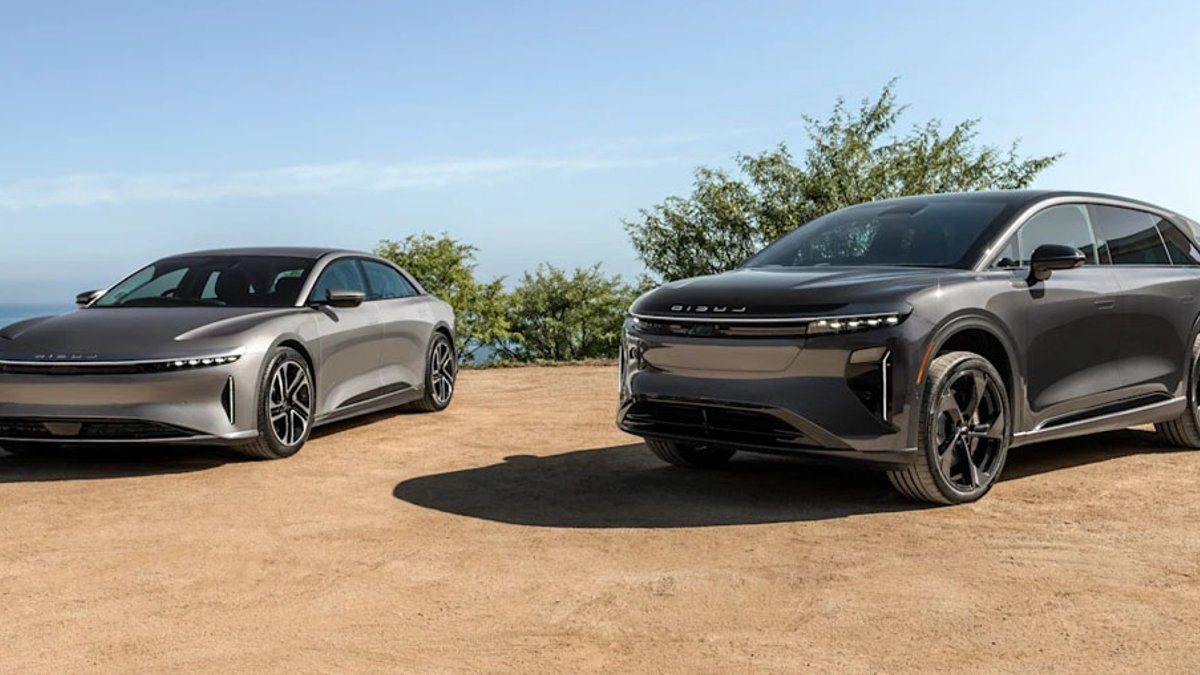
Lucid Motors has secured an additional $1.75 billion in funding from Saudi Arabia’s Public Investment Fund (PIF), its largest investor, following another challenging financial quarter. This investment comes after the company reported a $1.04 billion cash burn in the third quarter of 2026, despite generating only $350 million in revenue during the same period. Notably, Lucid managed to reduce its quarterly free cash flow consumption by approximately 30% compared to the previous quarter, when it used about $1.48 billion, highlighting some progress in cost management.
With this new funding, Lucid’s total available liquidity reaches $3.75 billion, including the expanded loan facility from PIF. However, the company continues to face significant financial challenges, including a net loss of $831 million and a loss attributable to common shareholders of $1.08 billion. These figures show the gap between Lucid’s spending and revenue, as the $1.04 billion cash burn reflects real money spent beyond what the business generated, not just accounting losses.
Financial Challenges and Operational Changes
Lucid’s cash burn is a stark reminder of the difficulties in translating engineering excellence into a profitable business. Under CEO Silvio Napoli, the company has implemented operational changes, including adjusting production, reducing inventory, and cutting expenses. However, despite these improvements, Lucid remains far from financial stability, consuming roughly $1 billion in cash every quarter and relying heavily on external funding.
The company’s financial dependence on Saudi Arabia’s PIF is evident, as the latest $1.75 billion injection buys Lucid more time but does not address the core issue of profitability. While the company’s advanced technology and luxury vehicles have earned industry recognition, building a sustainable business model remains a critical challenge. Lucid’s future hinges on its ability to launch successful products and compete effectively in a crowded EV market.
Upcoming Products and Manufacturing Expansion
Lucid is pinning its hopes on a midsize electric vehicle platform scheduled to enter production in the second half of 2027. These more affordable models aim to attract a broader audience beyond the luxury segment targeted by the Air sedan and Gravity SUV. Additionally, the company is expanding its manufacturing capacity with a second facility in Saudi Arabia, expected to begin operations in early 2027.
Partnerships in autonomous driving and robotaxi services are also part of Lucid’s strategy to diversify revenue streams. The company believes its expanded financial resources will sustain operations and investments through the fourth quarter of 2027, providing key time to launch new vehicles and validate its long-term strategy. However, the success of these initiatives remains uncertain in a highly competitive market.
The Path to Profitability
The EV industry thrives on competition and innovation, but Lucid’s long-term viability requires more than cutting-edge technology—it needs a proven business model. With nearly $2 billion in additional backing from PIF, Lucid has more time to execute its strategy, but the clock is ticking to demonstrate financial independence and turn its engineering prowess into a profitable enterprise.