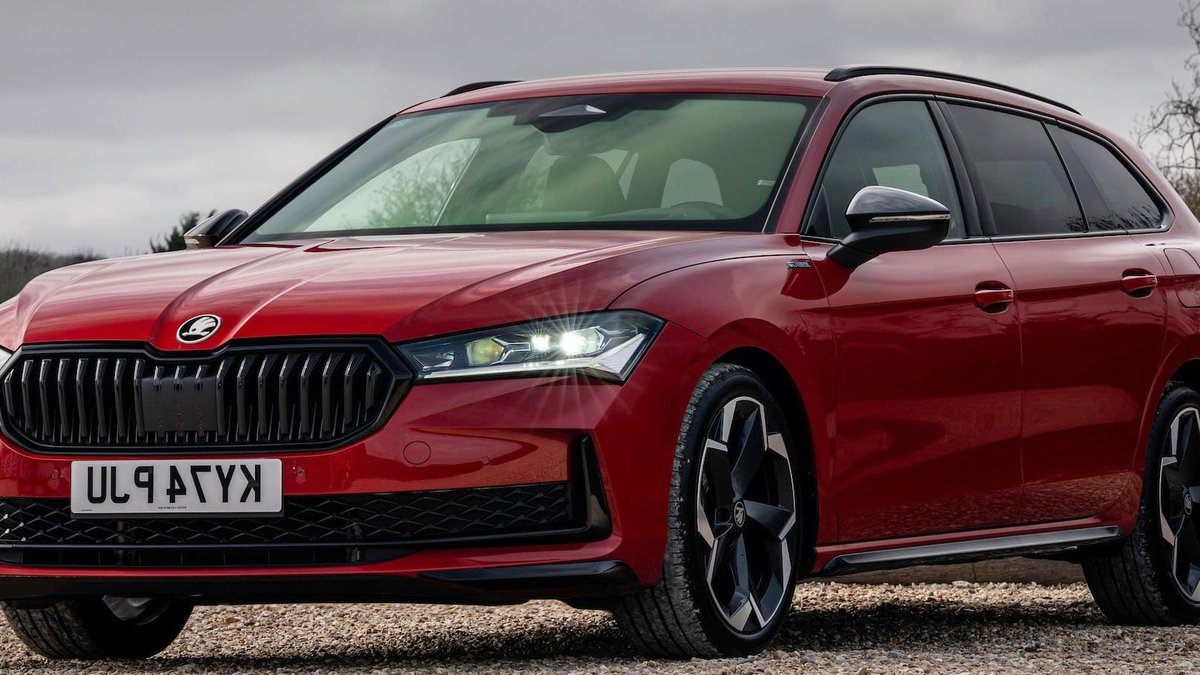
Skoda’s chief executive, Klaus Zellmer, has sparked concerns about the future of the estate car, specifically the Skoda Superb, by declining to guarantee its continuation. This decision comes as the car industry is shifting towards SUVs, with roughly one in every two new cars sold in Europe being an SUV, according to analysts at S&P Global Mobility.
Zellmer’s comments, made to Autocar, highlighted the challenges faced by saloons and estates, which are not on the rising path. He suggested that the company is considering whether it needs to maintain both the Octavia and the larger Superb in its lineup, or if one car could cover both segments.
The Slow Decline of the Estate Car
The Skoda Superb’s potential demise is part of a larger trend, with several estate cars already being discontinued. The Ford Mondeo estate, Vauxhall Insignia Sports Tourer, and Mazda 6 Tourer are among the models that have been axed. Volvo, a brand known for its estates, has also ended production of its V90 and V90 Cross Country models.
Hyundai is retiring its i30 Tourer, and Volkswagen has turned the Passat into an estate-only model, dropping the saloon altogether. These decisions reflect the industry’s focus on cutting costs and chasing the more profitable SUV market.
Skoda’s parent company, the Volkswagen Group, has committed to significantly reducing its total model count over the next decade. This move is likely to impact the Superb, which has been a successful model for Skoda, with over 1.6 million units sold since its introduction in 2001.
The Future of the Skoda Superb
The next-generation Octavia estate, previewed by the Vision O concept, is set to be just 52 millimeters shorter than the current Superb Combi. This similarity in size raises the question of whether both models are necessary in Skoda’s lineup. The company may opt to discontinue the Superb, allowing the Octavia to grow into its space and offer similar practicality and roominess.
Related Post: Luxury Cars at Bargain Prices: UK Second-Hand Market Revealed
The Skoda Superb’s potential discontinuation is a significant development, given its history and success. The model has been in production since 1934 and has become synonymous with Skoda’s brand identity. Its demise would mark the end of an era for the estate car, which has been a staple of the automotive industry for decades.
Despite the challenges faced by estate cars, there are still several models available on the market. The Skoda Octavia Estate, Volkswagen Passat, and Toyota Corolla Touring Sports offer practicality and value, while premium brands like BMW, Mercedes, and Audi continue to produce high-quality estate cars.
The BMW M3 Touring, for example, is a high-performance estate car that can reach speeds of up to 190mph. However, with Audi confirming the discontinuation of its RS6 Avant, the window for buying a new, high-performance estate car may be closing faster than expected.
According to Skoda, the decision to discontinue the Superb has not been made, but the company is exploring options to reduce costs and increase efficiency. The Superb’s length, at 4,902mm, is just 52 millimeters longer than the next-generation Octavia estate, which could make it redundant in the lineup.
These models offer practicality and value, making them a sensible choice for families. Additionally, premium brands like BMW, Mercedes, and Audi continue to produce high-quality estate cars, such as the BMW 3 Series and 5 Series Touring, and the Mercedes C-Class and E-Class Estate.
Benefits of Estate Cars
Estate cars offer several benefits over SUVs, including better handling and lower running costs. They are also frequently roomier, with a longer, flat boot providing ample space for cargo. Furthermore, estate cars tend to be cheaper to buy and maintain than equivalent SUVs.