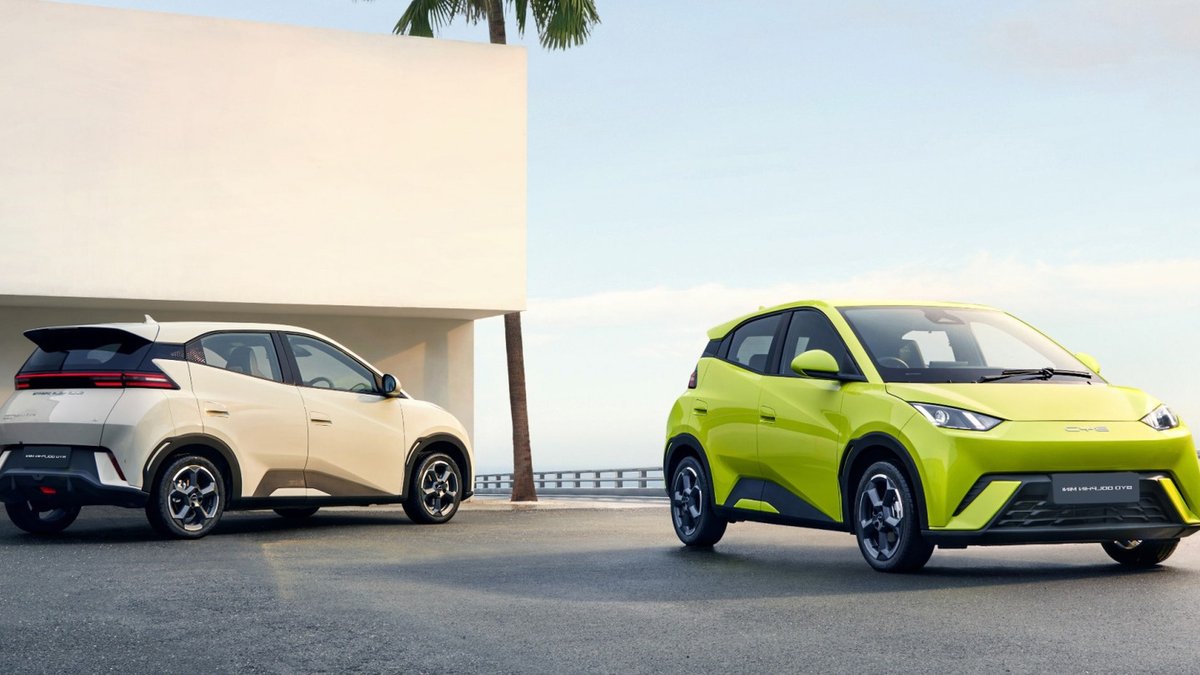
Chinese-branded cars are likely heading to U.S. showrooms within the next decade, and Ford CEO Jim Farley recently said he expects it to happen in five to ten years. The question isn’t really whether they’ll arrive, but how American buyers will respond when they do. That’s the heart of a discussion that’s been simmering for years, and it’s now moving from speculation toward something more concrete.
There are already Chinese-built vehicles on American roads. Volvo, Polestar, and Lincoln all produce some models in China, and Waymo has been testing imported Zeekr robotaxis. Chinese brands like BYD and Great Wall showed vehicles at the North American International Auto Show more than 20 years ago, with plans that never materialized. Market conditions may not have been right then, or American buyers weren’t ready for the “Made In China” label. But the situation looks different now.
Chinese automakers haven’t focused on the U.S. the way Japan and Korea did in their early years. Instead, they’ve built massive market share across the Global South, then moved into Europe. In 2021, Chinese brands held just 0.5% of the European car market. By June of this year, that figure had grown to 10.9%. These aren’t the cheap, poorly built cars many Americans might assume — they’re competitive products with real engineering behind them.
Related: Tesla Designer’s V8 Solstice Impresses Jay Leno
The history of the American market offers some clues. Japanese automakers arrived in force during the 1970s and steadily pulled customers away from the Big Three. By the 1990s, Japan was producing cars like the Miata, the NSX, and the Lexus LS400 — vehicles that forced established brands to rethink their approach. Korean manufacturers went through a similar evolution, and Kia and Hyundai are now enjoying what looks like a strong era of their own.
American consumers are notoriously price-conscious and show little brand loyalty when a better deal appears. If a competent Chinese-built sports car came to market at a significantly lower price than its competitors, it’s hard to imagine it sitting on lots for long. The comparison to Amazon is telling — if a $25,000 pickup truck could be delivered from China, demand would likely be immediate.
That raises a question about how much weight buyers place on where a car is built versus what it costs. The Japanese and Korean brands faced similar skepticism when they first arrived, and both eventually won over American buyers with quality and value. Chinese brands have spent the last two decades developing their own approach, and they appear to be learning from what worked for their predecessors.
Related: Growing family sparks car upgrade search
Detroit may not be prepared for this shift. The current offerings from Chinese automakers are competent across segments, from electric sedans to SUVs, and they’re arriving with aggressive pricing strategies. European manufacturers might face similar pressure. Japan still has strong positions in several categories, but the competitive picture is clearly changing.
The real test won’t be about regulations or trade policy — it’ll be about consumer choice. Some buyers will stick with American-made vehicles out of principle. Others won’t care where a car is built as long as it meets their needs and fits their budget. The 20-year wait for Chinese brands to enter this market suggests the barriers were real, but those barriers are starting to look less permanent.
Chinese automakers have already proven they can compete in Europe and across emerging markets. The U.S. represents the largest untapped opportunity in their global strategy, and the pressure to enter will only grow. Whether that happens in five years or ten, the groundwork is clearly being laid. The discussion around Chinese cars in America is no longer about whether they’ll come — it’s about what happens when they do.