Not every icon launches fully formed. The most celebrated nameplates in the auto industry often took time to refine their formula across generations. Some hit the ground running, while others needed decades to find their stride. The common thread is a relentless pursuit of engineering excellence and an understanding of what customers want.
The Mercedes-Benz SL is a prime example. The 2022 SL marked a major shift in the 74-year unbroken history of the Mercedes-Benz SL. The roadster moved under the wing of AMG and became the first to feature 2+2 seating as standard. The original 300SL from 1952 set the template for these elegant roadsters and coupes. The lineage includes the gullwing doors, the pagoda roof, and the V12-powered SL65. A 74-year production run without a poor generation is rare. The SL never missed a beat.
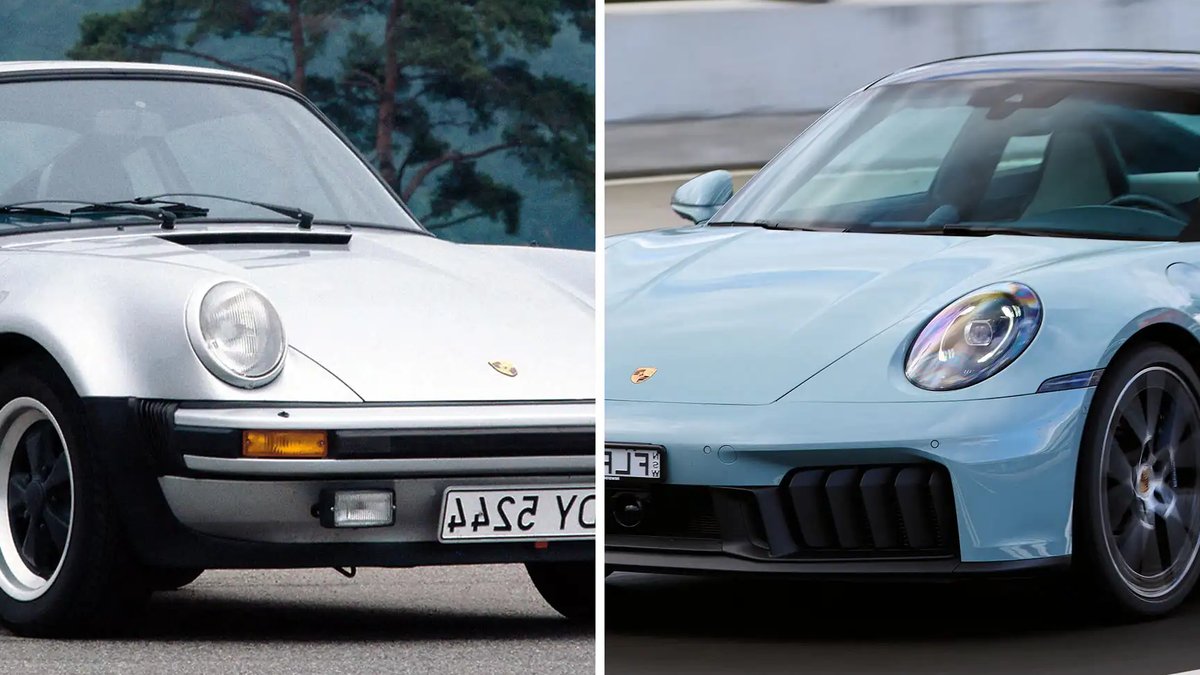
Porsche 911 Evolution
Porsche credits Peugeot for the iconic 911 nameplate. In 1963, the company considered the “901” badge, but the French manufacturer objected to a three-letter name with a zero in the middle. Production began in September 1964 with eight generations now in existence. The car evolved from an interesting curiosity to a benchmark that rivals have stopped trying to challenge directly. It has defeated everything, including ever-stricter emissions regulations, which forced the latest generations toward hybridisation. It remains the 911.
For 55 of the last 74 years, a Bentley Continental has been available for purchase. The badge took a sabbatical between 1965 and 1984, but it has returned in strong form. Five “families” of Continental exist, starting with the 1952 R-Type and extending to modern Volkswagen Group products. The 1991 Continental R was notable because it was the first Bentley model not to share a body with Rolls-Royce since the 1965 S3 Continental. The current model comes as a coupe or convertible, with the former Continental Flying Spur sedan now a standalone Flying Spur variant.
Land Rover‘s Range Rover is another success story. It took time for the company to realise that there was no theoretical limit to what customers would pay for a Range Rover. The original car cost $7,475 when it arrived in 1972. Adjusted for inflation, that figure approaches $100,000 in 2026, yet the top variant now costs $442,351. People scramble to secure these vehicles. It is a success story built on the cachet of effortless, understated British luxury.
Rolls Royce Phantom Legacy
Rolls-Royce has no peer when it comes to the longevity of luxury car nameplates. The Phantom badge first appeared in 1925, making it over 100 years old. Remarkably, for what was originally a low-volume, handbuilt limousine, it has been an ever-present for all but 27 years. The Phantom VII of 2003 changed the script as the first Rolls-Royce built after the BMW takeover. It breathed new life into the model, and the template carried over for the 2017 Phantom VIII. Today, the Phantom lives in a super-luxe niche.
The Chevrolet Corvette is a car that took a long time to realise its potential. The mission of Zora Arkus-Duntov, the chief engineer and godfather of the Corvette, was to transform it from a styling-led pretender to a performance car that could compete with the best from Europe. He began mid-engined design studies in 1960, yet it took another 60 years for a Corvette with the engine behind the driver to become reality. The 2020 C8 version saw the Corvette take a huge step forward.
BMW 7 Series Innovations
Some iconic nameplates arrived with a specific mission to introduce features that later became standard across the industry. They spread their influence from luxury segments to mass-market vehicles. The BMW 7 Series is a prime example. The next year will mark half a century of the BMW 7 Series. The sedan introduced several key technologies to the brand’s lineup. It was the first BMW to offer anti-lock brakes. The 7 Series was also the first to include airbags, an onboard computer, and satellite navigation. These innovations eventually appeared in cheaper models. The car remains a key part of BMW’s plans. An updated version of the seventh generation is set to launch in 2026. The electric i7 is also available.
The Lexus LS badge has existed for 37 years. Its introduction in 1989 provided a necessary push to the luxury car market. Its introduction in 1989 gave the luxury car market the kick it required, and we’re now in the fifth generation. The LS was withdrawn from sale in the US and Europe in 2025, so we’re one of the lucky markets that is still offered the LS500, available as an LS500 with a 3.4-litre V6 automatic or the LS500h with a 3.5-litre V6 hybrid with a continuously variable transmission.
It’s still a remarkably refined, thoughtful and beautifully engineered limousine. Get it while you can. Get advice on road rules, new cars, used cars, budget hacks and car maintenance By clicking “Sign up now” you acknowledge that you have read and agree to the Drive Terms & Conditions and Privacy Policy