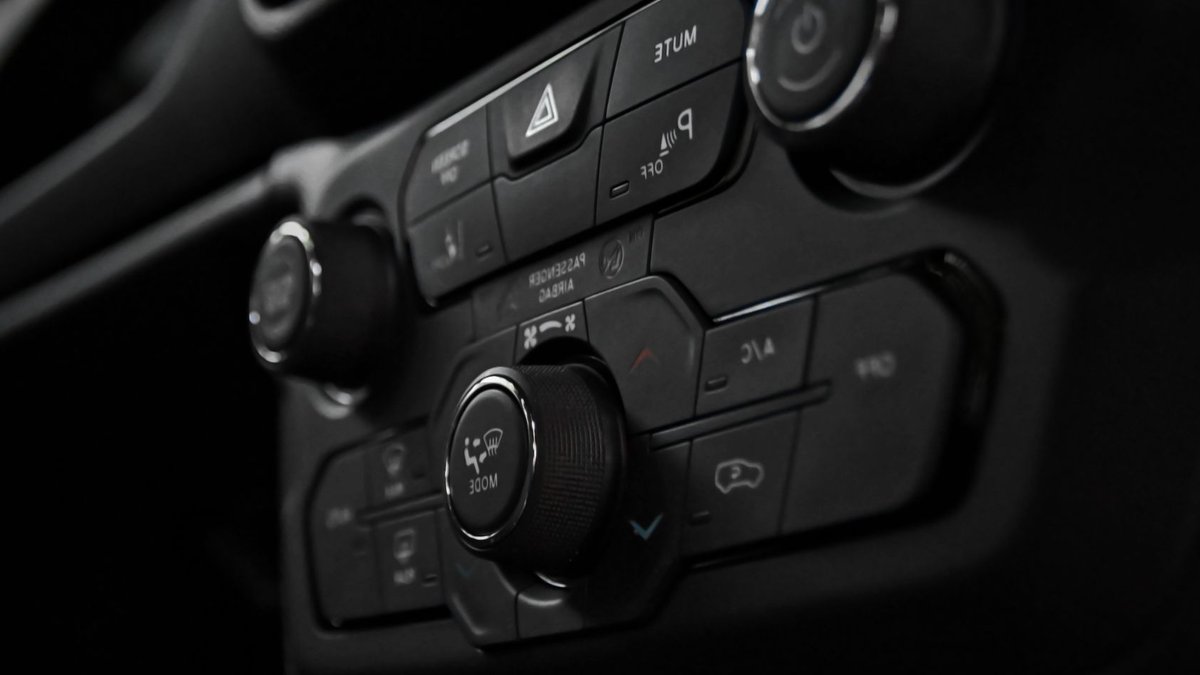
Euro NCAP, the crash safety body, has begun evaluating interior controls in vehicles, favoring physical buttons over touchscreens. The organization has noted a stark difference between European and Chinese carmakers in their approach to basic driving functions.
Euro NCAP’s stance on buttons vs. touchscreens
While Chinese cars are achieving high safety ratings, Euro NCAP has criticized their over-reliance on touchscreens for essential driving controls. In contrast, European carmakers have been praised for reintroducing physical buttons, with the Audi Q7 and Kia EV2 receiving high marks for their intuitive interior controls.
Under new Safe Driving protocols, Euro NCAP emphasizes that key driving controls, such as indicators and hazard lights, should be operated by direct physical input rather than buried in touchscreen menus. This shift aims to reduce driver distraction and enhance safety.
Testing and ratings
In recent tests, the Audi Q7 scored 90% overall for driving controls, with a perfect score for essential functions. The Xpeng X9 received only 20% for primary driving controls, despite matching the Audi in comfort and infotainment. The Kia EV2 outperformed both with a 100% rating in driving controls.
Euro NCAP’s data reveals a trend: since 2026, only one Chinese car has scored well in interior button usage, while European brands consistently excel. The BMW iX3 and Cupra Raval are cited as examples, with the Geely E2 matching the Raval’s score as the Chinese exception.
Beyond interior controls, Euro NCAP has also evolved its evaluation of active driver assistance systems. The Audi Q7 and Kia EV2 were praised for their lane-keeping assistance, which adjusts intervention based on driver alertness, reducing distractions.
A 2000km on-road test now assesses vehicles’ ADAS in real-world conditions. The Xpeng X9 faced criticism for its speed assistance system, which fell short of Euro NCAP’s effectiveness benchmarks.
Despite the focus on interior controls, the X9 still earned a five-star safety rating overall. In fundamental crash safety, the Xpeng scored 91%, higher than the Audi (88%) and the Kia (86%). The Audi Q7 achieved a perfect 100% score in post-crash safety, with the X9 at 91% and the EV2 at 89%.
The latest testing results also include ratings for the BYD Shark and Mazda 2 Hybrid. These ratings are largely derived from other data and recorded as 2025 test results, as the evaluation of physical controls was introduced in 2026 updates. The Shark’s five-star rating mostly relies on Australian NCAP testing, while the Mazda 2 Hybrid’s four-star score is carried over from the Toyota Yaris.
Euro NCAP’s Criticism of Chinese Carmakers
Since 2026, only the Geely E2 has scored well among Chinese models, matching the Cupra Raval’s 80% rating. Other Chinese cars tested, such as the Zeekr 7GT and Aion UT, scored 20%, while the Leapmotor B05 scored 0%.
This test checks how well these systems perform outside controlled environments.