China’s auto industry produced 34.5 million cars and trucks in 2025, more than double the United States’ 16.3 million that year, according to industry data.
Export surge eclipses Europe and Japan
Last year Chinese manufacturers shipped roughly seven million vehicles abroad, overtaking both Europe and Japan in total exports. European officials have voiced concern. Stéphane Séjourné, a vice‑president of the European Commission, described the practice as a “predatory strategy” that has led to “loss of market share for our manufacturers and massive imports of Chinese models.” Chinese cars now account for more than 15 percent of Europe’s electrified‑vehicle segment.
New‑energy dominance fuels growth
In 2025 China produced 16.6 million new‑energy vehicles (NEVs), a 29 percent increase from the previous year. The NEV share of Chinese sales sits near 50 percent, while the United States reports about 22 percent of its sales as NEVs, with battery‑electric models comprising only 7.7 percent of that total. Tariffs have kept Chinese cars largely invisible in the U.S. market, prompting even brands like Polestar to withdraw.
American media coverage remains sparse, often repeating the outdated view that Chinese vehicles are unsafe or unsuitable for global markets.
Related: Aston Martin Owners Inspire Those Around Them
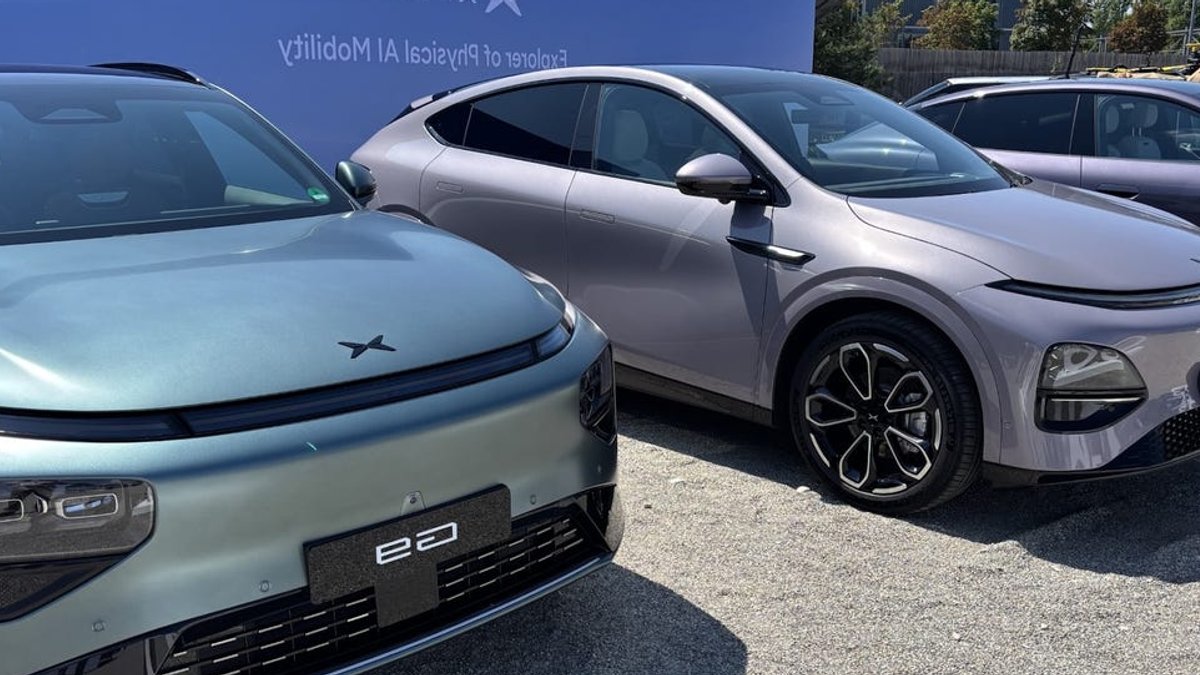
Rich Benoit, host of the “Rich Rebuilds” YouTube channel, visited China in July and test‑drove Xpeng models at the Guangzhou auto show. He returned impressed but noted that if Chinese EVs entered the United States, they would not immediately upend domestic manufacturers because electric cars currently represent a small slice of American sales.
Industry observers point out that the United States’ EV adoption is uneven. States such as Alabama and North Dakota report low electric‑car purchases, limiting immediate demand for imported Chinese models.
Tu Le, founder of Sino Auto Insights, explained that China’s market size rivals the combined output of the European Union and the United States, ranging from 24 million to 26 million units when commercial vehicles are included. The market has held the top global position since 2009, consistently outpacing the United States.
Le also addressed rumors that Tesla plans to sell its China assets. While Elon Musk denied the claim, he suggested that Tesla’s focus may be shifting toward artificial‑intelligence and autonomous‑driving technology rather than expanding passenger‑vehicle production.
Related: Ford Electric Truck Gets Apple Maps Integration
He highlighted a broader trend: foreign automakers are losing share to domestic Chinese brands. Six years ago, foreign manufacturers collectively held over half of China’s sales volume; that figure has fallen to about 27 percent in the most recent quarter.
For consumers, the rise of Chinese automakers means more choices at lower price points, especially in the EV segment. If Chinese brands manage to enter the North American market, buyers could see affordable electric models that currently have no direct equivalent in the United States. This shift could alter pricing patterns and speed the adoption of cleaner vehicles across the region.
Consumers gain more options.