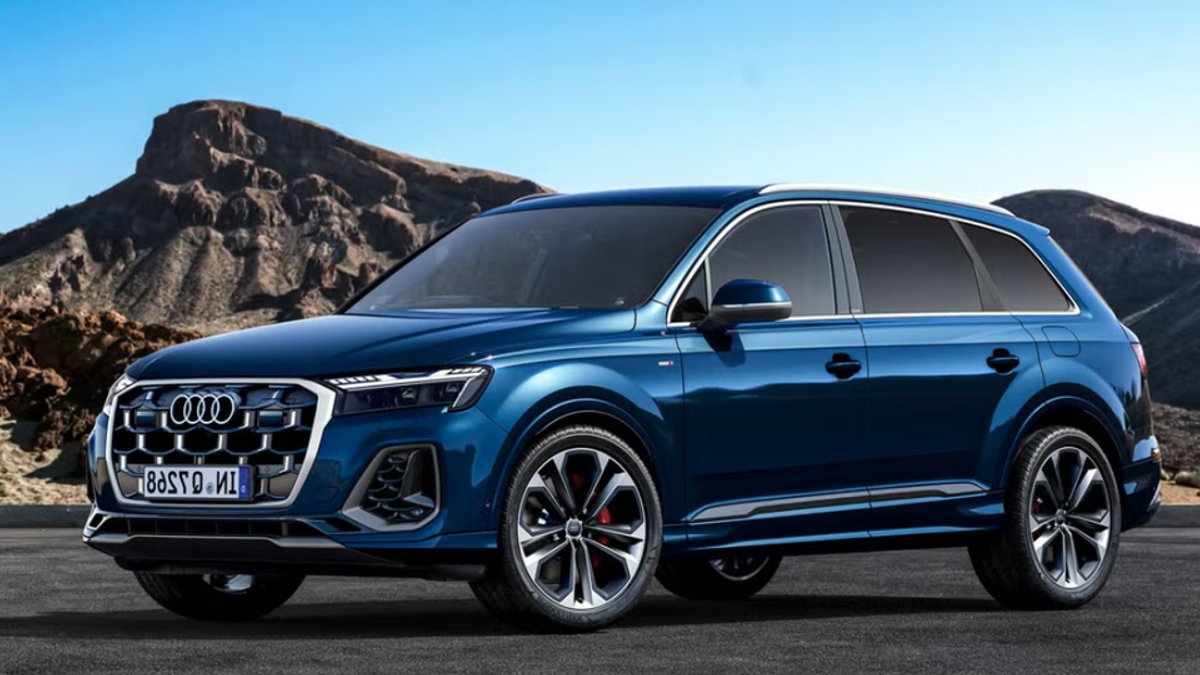
Large vehicles and trucks are statistically safer on the road, according to a new study by the Insurance Institute for Highway Safety. The organization released a list of six vehicles that had zero deaths per million registered vehicle years, covering models from 2018 through 2021.
The Institute defines a registration year as one vehicle registered for one year. A single vehicle registered for three years would count as three registration years in this metric.
Among the models with zero deaths identified in the study are the Audi Q7 AWD, BMW X7 4WD, Chevrolet Tahoe 4WD, Mercedes-Benz GLB-Class 4WD, Mercedes-Benz GLE-Class 2WD, and Toyota Tundra CrewMax 4WD. The list is dominated by SUVs and a full-size truck, a pattern consistent with the Institute’s findings regarding vehicle size.
“Size and power matter, as do vehicle crashworthiness and effective crash avoidance systems,” said IIHS president David Harkey in a statement.
Related: Wayne Taylor Racing Claims First Cadillac GTP Victory
Small cars have the highest fatality rates
The study also highlighted vehicles with the highest death rates. The Kia Rio topped the list with 170 deaths per million registered vehicle years. Other vehicles with high rates included the Nissan Versa, Chrysler 300 2WD, and several Dodge models.
More than half of the 2023 models with the highest driver death rates are small cars, sports cars, or muscle cars. The Chevy Camaro had 88 deaths, and the Corvette had 82. Harkey noted that even the safest small cars do not fare well when they collide with large pickups and heavy SUVs.
“Powerful engines and marketing that attracts aggressive drivers is the issue for sports cars and muscle cars,” Harkey added. “They’re dangerous mainly because of how they’re driven.”
Factors influencing crash statistics
Researchers caution against using the data to compare specific vehicles directly. The crash database includes driver age and gender, allowing analysts to adjust rates to account for the fact that men are involved in more crashes than women. Older drivers are also more likely to be killed in a given crash than younger ones.
However, the data are not adjusted for other factors that might influence fatality rates, such as driving speeds or the number of miles traveled per day. It is possible that a greater proportion of new or inexperienced drivers chooses cheaper vehicles. Those working multiple jobs may also log more miles per day than more affluent drivers.
Related: How to Encourage Student Empowerment
It is also difficult to separate out drivers operating under the influence. The Institute notes that these factors complicate the interpretation of the safety rankings.
Heavy trucks pose risk to others
The study also looked at vehicles that cause the most deaths in other cars. Stellantis brands, specifically Ram models, appeared frequently at the top of this list. The Ram 3500 crew cab long bed 4WD had the highest rate of other-driver deaths per million registered vehicle years at 204.
Other vehicles that were likely to kill occupants in other cars included the Dodge Charger Hemi 2WD, Dodge Charger 2WD, and several Chevrolet Silverado 3500 models.
The Insurance Institute for Highway Safety points out that the statistics reflect more than just the vehicle’s build quality. The crash data captures real-world driving behaviors that vehicle engineering cannot always control.