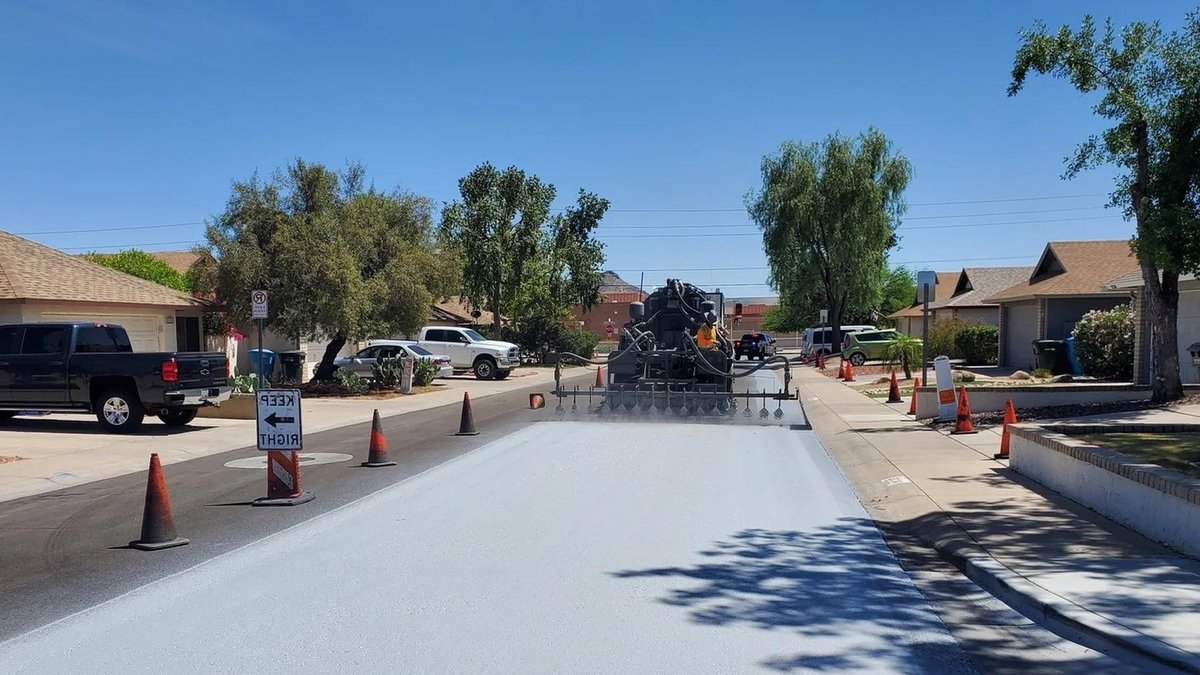
Climate change is a pressing issue, and cities like Phoenix, Arizona, are experimenting with measures to mitigate its effects. One such effort is the use of reflective coatings on road surfaces to reduce heat, reports the outlet. Early results show that these coatings can lower pavement temperatures, but with an unforeseen side effect: the air above the coated surfaces becomes even hotter.
Phoenix, the fastest-growing city in the U.S., covers 517 square miles, making it larger than Los Angeles by area. The city’s urban sprawl has led to a significant amount of paved areas, which absorb and retain heat during the day, causing health problems and infrastructure issues.
The Arizona DOT works mainly at night during the summer to avoid the heat. To address this issue, Phoenix, in partnership with Arizona State University, started its Cool Pavement Program in 2020, testing reflective coatings like CoolSeal.
The results have been generally positive, with surface temperatures between 12 and 10.5ºF lower than untreated pavement at noon and during the afternoon, respectively. Temperatures below the surface average 4.8ºF cooler, which helps the pavement last longer.
Related: eBay bans airbag sales over counterfeit worries
While the reflection keeps the ground cooler, it doesn’t make heat go away. Instead, it heats the air just above it, raising air temperatures near the surface about 5.5ºF. This can be particularly problematic for pedestrians, who may be exposed to even higher temperatures than they would be with untreated pavement.
This phenomenon is similar to what happens when you’re out in the sun on a snowy mountain or riding in a boat over water – the sun’s reflection off the surface below you can cause more severe sunburn. In a desert city like Phoenix, it’s difficult to avoid the heat indefinitely, and higher surface air temperatures during the day give people even less time to move between cooler environments.
After sunset, nighttime temperatures six feet above treated surfaces were 0.5ºF cooler than untreated surfaces. This indicates that treated pavement isn’t absorbing as much heat, reducing overall heat island effects.
Phoenix’s approach is a more targeted method to mitigate urban heat island effects. The use of reflective coatings in Phoenix may be effective, but its impact is still being studied.
Related: Audi F1 Report: Midseason Position Ideal
The city’s urban development highlights the need for a more thorough approach to addressing heat island effects. As Phoenix continues to grow, it will be essential to consider the trade-offs between different mitigation strategies and their impact on both infrastructure and human health.
The trade-off between cooler pavement and hotter air temperatures is complex. Modern cities are designed with cars in mind, rather than people. Nevertheless, the Cool Pavement Program’s findings provide valuable insights into the effects of reflective coatings on urban heat island mitigation.
It is a step in the right direction.