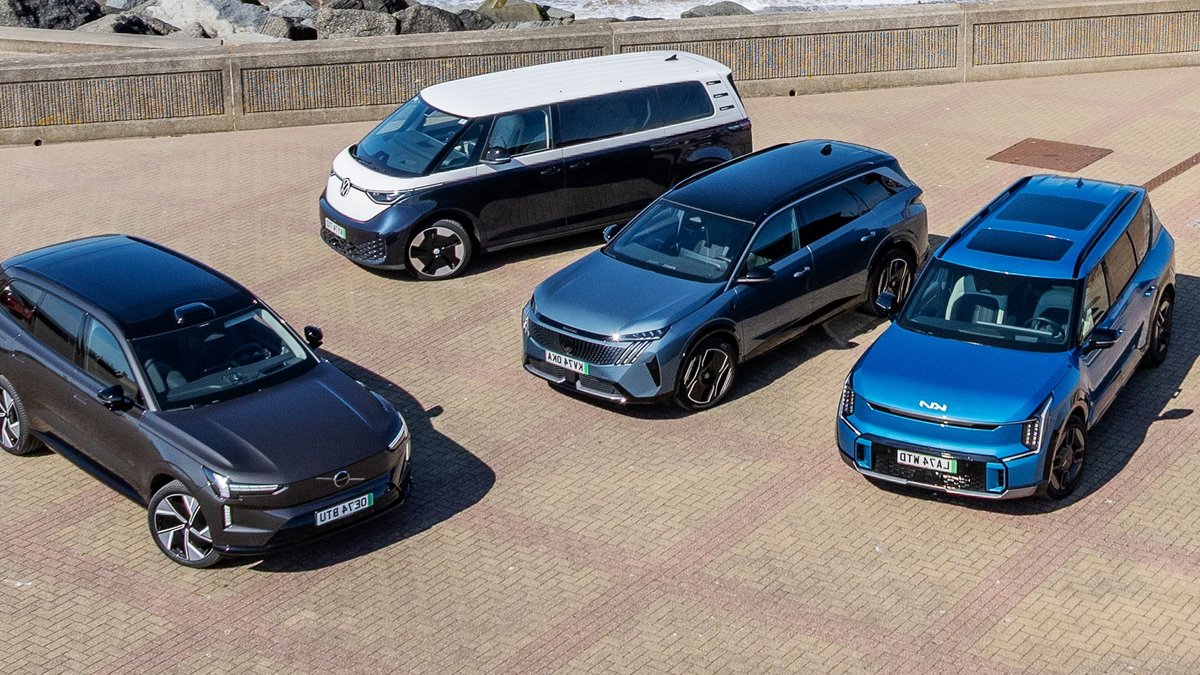
The UK market for electric vehicles with three rows of seats has expanded dramatically in early 2026. A mix of new-generation SUVs, MPVs and van-based models now offers buyers genuine seven-seat options, a segment that was almost nonexistent a few years ago.
Hyundai Ioniq 9 sets the benchmark
The Hyundai Ioniq 9 tops the list for overall space and established EV technology. At just over five metres long, the model houses a 110.3 kWh battery on the e-GMP platform, delivering a wheelbase that exceeds three metres. Seven adults can sit with a level of comfort that rivals larger premium rivals.
Fast charging is supported through a 350 kW DC system, allowing a 10-80% top-up in roughly 20 minutes. Pricing starts around £65 000, which, while high, undercuts the Volvo EX90 and offers a clearer value proposition.
Real-world range falls short of the WLTP claim; drivers report about 300 miles per charge rather than the advertised 385 miles. Still, the Ioniq 9’s distinctive styling and well-appointed cabin keep it at the forefront of the segment.
Value-focused and premium alternatives
Kia’s EV9 follows a similar size envelope but pairs a 99.8 kWh pack with a choice of single-motor rear-wheel drive (200 bhp) or a twin-motor 379 bhp setup. The latter propels the vehicle from 0-62 mph in 5.3 seconds. Charging to 80% takes about 24 minutes, and a brief 15-minute charge adds roughly 136 miles under optimal conditions.
While the EV9 lacks the Ioniq 9’s premium feel, its interior quality and performance justify a starting price that aligns with the Hyundai’s entry point. The model’s practicality makes it a strong contender for families seeking a blend of space and speed.
For buyers prioritising cost, the Peugeot e-Rifter offers a compelling package. Based on a compact van platform, the electric version provides three rows of seats and benefits from the UK electric-car grant, lowering the entry price to £31 600. A 199-mile WLTP range and a 30-minute 0-80% charge time suit urban and suburban use.
The e-Rifter’s interior is more refined than typical van-derived models, though steering wheels are smaller than average. Its sliding side doors aid access to the rear seats, and the vehicle’s eligibility for the government grant makes it one of the most affordable seven-seat EVs currently available.
Mercedes-Benz adds a premium flavour with the EQB, a compact seven-seater built on the GLB platform. Two powertrains are offered: a front-wheel-drive 250+ with 187 bhp and a four-wheel-drive 300 with 222 bhp. Both use a 70 kWh battery; the AWD version reduces WLTP range to 271 miles, compared with 324 miles for the FWD model.
Charging is modest at 100 kW DC, delivering a 10-80% charge in about 35 minutes. Interior quality matches Mercedes expectations, though the third row feels tight for adults. The EQB demonstrates that a luxury badge can coexist with a relatively compact footprint.
Mercedes also offers the larger EQV, a seven-seat van derived from the Vito platform, but its price starts at £92 000, placing it beyond the reach of most family buyers.
Retro charm meets electric range
The Volkswagen ID. Buzz LWB expands the seven-seat field with a distinctive boxy silhouette. Its long-wheelbase version carries an 86 kWh pack, giving a WLTP-quoted range of 293 miles. Real-world testing shows drivers typically achieve around 230 miles before recharging.
A high-output GTX variant pushes power to 335 bhp, shaving the 0-62 mph sprint to 6.4 seconds. Despite the muscular acceleration, the vehicle’s aerodynamic profile remains modest, affecting efficiency. Inside, the cabin offers generous headroom for occupants, though individual rear seats are absent and three child seats cannot be installed across the middle row.
Potential buyers who favor a more conventional electric estate may consider the Volkswagen ID. 7 Tourer, which provides five seats and a sleeker shape. The ID. Buzz LWB, however, remains the most eye-catching option for families prioritising style alongside capacity.
Premium practicality and emerging alternatives
Peugeot’s e-5008 arrives as a stylish seven-seat SUV priced just under £49 000. The model ships with a 73 kWh battery as standard, while a Long Range version upgrades to a 97 kWh pack.
The interior blends modern touches with the brand’s i-Cockpit layout, which some owners find takes time to adapt to. Despite this learning curve, the cabin maintains ample space for adults in the first two rows, while the third row remains best suited for short trips or child seats.
Rebranded equivalents of the e-Rifter appear from Vauxhall, Citroën and Toyota, offering identical dimensions and battery specifications. These variants share the same sliding-door access and eligibility for the UK electric-car grant, extending the value proposition across multiple marques.
Volvo’s EX90 completes the premium segment, featuring a claimed 374-mile WLTP range and a price exceeding £80 000. The model’s software focus has reduced physical buttons, prompting mixed reactions regarding ergonomics.