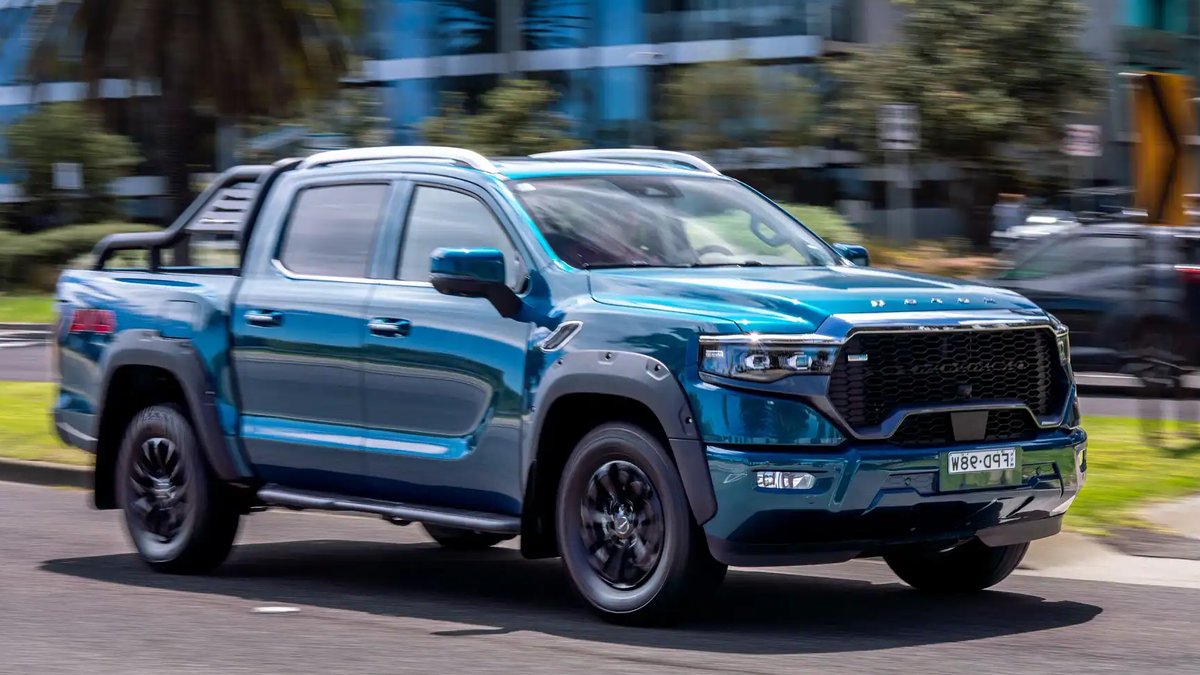
A new generation of giant electric utes from China is transforming Australia’s roads, and the trend is accelerating. The BYD Shark 6 Premium and GWM Cannon Alpha PHEV now surpass even the largest Australian utes, including the Ford Ranger, which has grown steadily in size and weight over the past 16 years.
The BYD Shark 6 Premium measures 5.46 meters long, 1.97 meters wide, and 1.93 meters high, exceeding a Ford Ranger Wildtrak double-cab by nine centimeters in length, five centimeters in width, and four centimeters in height. This is not gradual expansion but a competitive push by manufacturers to maximize what can fit on roads originally designed for smaller cars.
Australian consumers have long preferred large vehicles, but electrification is accelerating this trend. Concerns about fuel efficiency no longer apply when utes operate on electric or hybrid power. The combination of size, performance, and environmental benefits has become an irresistible package—despite the growing physical risks these vehicles pose.
Research examining over 10,000 pedestrian crashes in Victoria found that every 10-centimeter increase in vehicle height raised pedestrian fatality odds by 11 percent. Simulations suggested that limiting larger vehicles to median dimensions could reduce fatalities by about 9 percent. However, the safety ratings that matter most, such as the five-star ANCAP rating for the BYD Shark 6, prioritize protecting occupants inside the vehicle rather than those in smaller cars or on foot.
The fine print exposes a critical oversight. The Shark 6’s rating includes an 8-point penalty in the MPDB test due to its size and design, which heightens risks for other road users. Most buyers will only see the five stars, reinforcing the misconception that bigger vehicles are inherently safer, without addressing the broader safety trade-offs.
This issue extends beyond pedestrians. The growing disparity in crash compatibility between these giants and standard passenger cars is becoming more dangerous. While heavier vehicles offer collision protection up to a point, beyond 1,800 kilograms, additional weight provides little benefit to the driver while exponentially increasing risks for others. As more drivers choose larger vehicles, the safety advantage erodes, leaving all road users more vulnerable in mixed traffic.
Marketing for these new models reflects a broader shift in how electric utes are positioned. Unlike traditional Australian utes, which have long been sold on towing capacity and off-road capability, the BYD Shark 6 emphasizes electric range, instant torque, and smart features. Buyers are drawn to vehicles that deliver both size and efficiency, a combination previously unattainable with conventional internal combustion engines.
The problem is unevenly distributed. A driver in a heavy ute may feel safer, but occupants of sedans or motorcycles face exponentially higher risks. Even minor increases in vehicle dimensions can lead to severe consequences when these giants collide with smaller vehicles. Without regulatory or financial incentives, the trend will persist, driven by consumer demand and manufacturer competition.