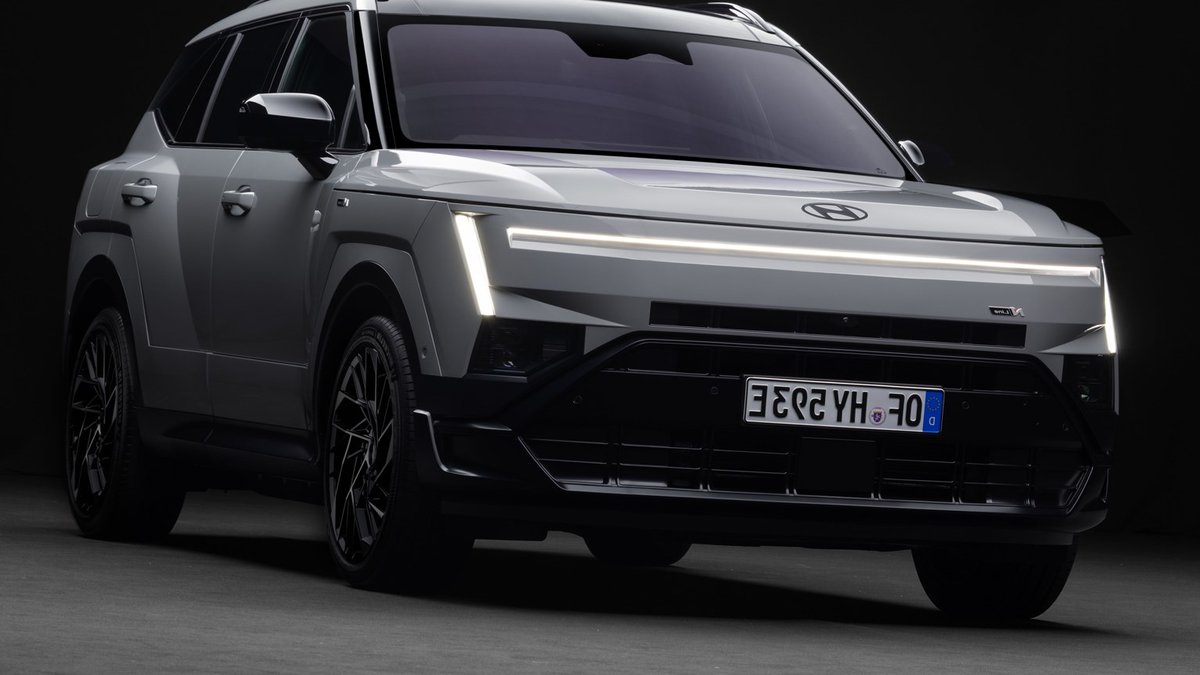
Hyundai’s Tucson SUV has undergone a significant redesign for its fifth generation, with the automaker introducing the N-Line variant at the 2026 Paris Motor Show. This update shifts the model toward a sharper, more assertive design while expanding its powertrain options to include hybrid, combustion, and manual transmission variants in Europe—a choice that remains uncommon for family SUVs in that market.
The new Tucson adopts Hyundai’s “art of steel” design language, replacing soft curves with angular creases, bold panel lines, and vertically oriented brake lights that evoke crystal-like precision. The front and rear light clusters incorporate indirect lighting techniques, while pronounced wheel arches and roof rails enhance its rugged character. Despite its aggressive styling, the SUV measures 35 millimeters longer and wider than its predecessor, with a 40-millimeter extension of the wheelbase to optimize interior volume.
A key distinction in the European version is its steeper rear window angle, which Hyundai states improves rearward visibility. The model also introduces two matte paint finishes, a deep blue and a “rich walnut” shade, responding to consumer preference for premium surface treatments. Eduardo Ramirez, Hyundai’s European design director, highlighted how matte colors accentuate the vehicle’s three-dimensional contours, while Christopher McKinnon, head of product development for Europe, noted that such finishes help the brand differentiate itself in a competitive SUV segment.
The N-Line trim, developed specifically for European customers, features sportier styling cues, 20-inch alloy wheels, and upgraded interior materials including leather and suede-like upholstery. McKinnon observed that N-Line variants account for 25 to 30 percent of total sales across Hyundai’s European lineup, making them a vital segment, particularly in the UK market.
Read Also: Peugeot revives rally legend with 800hp electric concept
Inside, the Tucson emphasizes what Hyundai calls “furnished space,” with softened edges on surfaces like door armrests and the dashboard to create a more refined, less utilitarian atmosphere. The infotainment system, Pleos Connect, operates on an Android-based platform and offers either a 12.9-inch or 17-inch touchscreen, depending on the trim level. An AI-powered voice assistant named Gleo handles natural language commands, while the system integrates advanced driver-assistance features such as memory reverse assist, which replicates a driver’s entry path when reversing, and a ground view monitor for four-wheel-drive models that overlays a camera feed on the windshield.
The powertrain lineup reflects Hyundai’s efforts to align with diverse European market demands. While hybrid models will lead sales, the automaker confirmed a manual transmission option for the base 148-horsepower turbocharged petrol engine, paired with a seven-speed dual-clutch automatic. McKinnon explained that manual transmissions retain demand in regions like Turkey, where fuel costs and economic considerations influence purchasing decisions.
Hybrid variants will drive most UK sales, with the standard hybrid combining the same petrol engine with a 1.49 kWh battery and electric motor to produce 242 horsepower. A plug-in hybrid option features a 17.1 kWh battery, 288 horsepower, and an electric-only range of 50 miles. Both hybrid models include a “Stay” mode that maintains electronic functions while shutting down the combustion engine when parked.
Pricing for the UK market has not been disclosed, but deliveries of the redesigned Tucson will begin in dealerships in early 2027, with initial shipments expected around March.