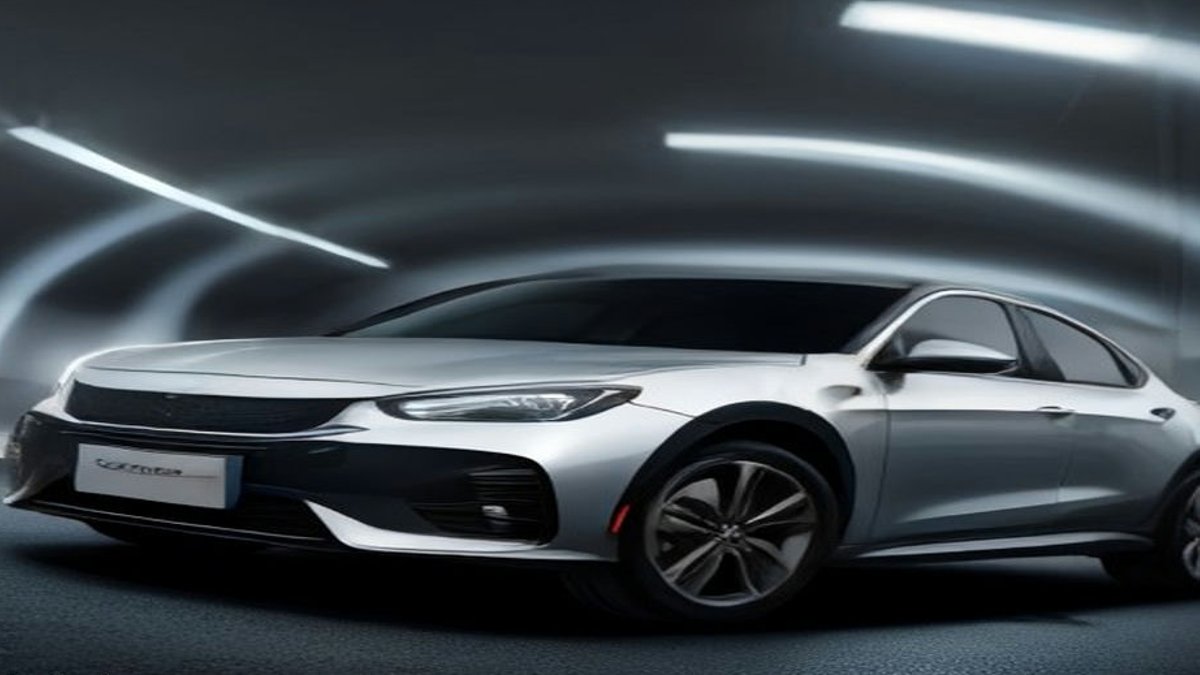
Geely is currently developing a cutting-edge charging facility in China, boasting an impressive 1,800kW rating. Although this technology is not yet available in the UK, and no Geely models currently on the British market can utilize this level of power, it represents a significant step towards achieving charging times measured in minutes, rather than the typical coffee break duration.
The significance of the numbers
To put the 1,800kW rating into perspective, it is equivalent to 1.8 megawatts. If a battery were capable of accepting this power continuously, without any losses or reduction in charging speed, it would theoretically receive 30kWh of energy every minute, or 150kWh in just five minutes. However, real-world charging sessions are more complex, and the actual charging process involves various factors that affect the rate at which the battery charges.
A useful way to understand the 1,800kW rating is to consider the energy delivered, rather than focusing solely on percentages. For example, a standard 7kW home wallbox provides approximately seven kilowatt-hours of energy in about an hour, before accounting for losses. In contrast, a 350kW rapid charger can theoretically deliver the same amount of energy in just over a minute. The 1,800kW charger operates on an entirely different scale, offering a significantly faster charging experience.
A comparison of EV charging power levels, ranging from 7kW home charging to Geely’s proposed 1,800kW system, highlights the notable differences between various charging methods:
- Typical UK home wallbox: 7kW, designed for convenient overnight charging
- UK official ultra-rapid category: 150kW and above, classified as ultra-rapid by the Department for Transport
- Established high-power public charging: around 300 to 350kW, sufficient to support many of today’s fastest-charging European EVs
- Tesla V4 cabinet capability for cars: up to 500kW, demonstrating the progress of established charging networks
- Current high-voltage Zeekr capability: up to around 480 to 600kW, depending on the model and market, showcasing Geely group vehicles’ ability to operate beyond older 150 to 250kW norms
- BYD Flash Charging: up to 1,500kW, a mass-produced system already demonstrated in the UK with compatible Blade Battery 2.0 cars
- Geely system in development: 1,800kW, which would raise the single-car charging ceiling again if paired with a suitable battery
Why Speed Isn’t Guaranteed
However, it is essential to note that the actual charging process is more complex than simply plugging in and achieving the maximum charging rate. The car’s battery chemistry, voltage, cooling system, cable and connector limits, battery temperature, state of charge, and software all play a role in determining the charging speed. As a result, a 1,800kW charger does not necessarily mean that the car will charge at 1,800kW.
A 1,800kW charger can offer 1,800kW, but the car decides how much power it will accept. For instance, plugging a 150kW car into a 1,800kW charger would result in a 150kW charging session, despite the charger’s higher capacity. The vehicle’s battery and charging system limitations dictate the actual charging speed.
The electrical requirements for megawatt-scale charging are substantial. At 900 volts, this increases to around 2,000 amps. Consequently, megawatt-scale charging demands more than just a higher rating on the charger; it also requires advancements in thermal management, liquid-cooled cables, battery resistance, and the vehicle‘s high-voltage architecture.
Geely’s experience with Zeekr has provided valuable insights in this area. The European Zeekr 7X, with its 800V architecture, can charge from 10 to 80 per cent in as little as 13 minutes under optimal conditions. Zeekr Power has also developed charging hardware capable of megawatt-class performance in China. The 1,800kW project is a natural progression of Geely’s existing endeavors, rather than a sudden, unprecedented development.
Costs May Outweigh Benefits
Geely has not announced UK pricing for the 1,800kW charger, as it is not yet available in the UK. This is a key factor, as public rapid charging can already be expensive per mile, especially when compared to home charging. The benefit of shaving 15 minutes off a charging stop may be diminished if the electricity cost is significantly higher.
Another critical question is how often the battery can accept such high charging speeds. Battery manufacturers have made significant progress in controlling temperature and degradation, but very high charge rates generate heat and electrochemical stress. The key issue will be whether a future Geely model can repeatedly achieve very fast charging over an extended period without unacceptable capacity loss.
Winter Challenges Remain
Additionally, it is essential to consider how the 1,800kW charger will perform in British winter conditions. Cold batteries charge more slowly unless they are preconditioned, and route planning that heats the pack before arrival can significantly improve modern EVs’ charging performance.
Grid Limits and Buffers
A further challenge arises when multiple cars arrive at the charging station simultaneously. If one driver uses a 1,800kW station and another plugs into an adjacent socket, the grid connection must be able to handle both demands. While a stationary battery buffer can help mitigate peak power requirements, the underlying infrastructure must still be robust enough to support simultaneous high-power charging sessions.