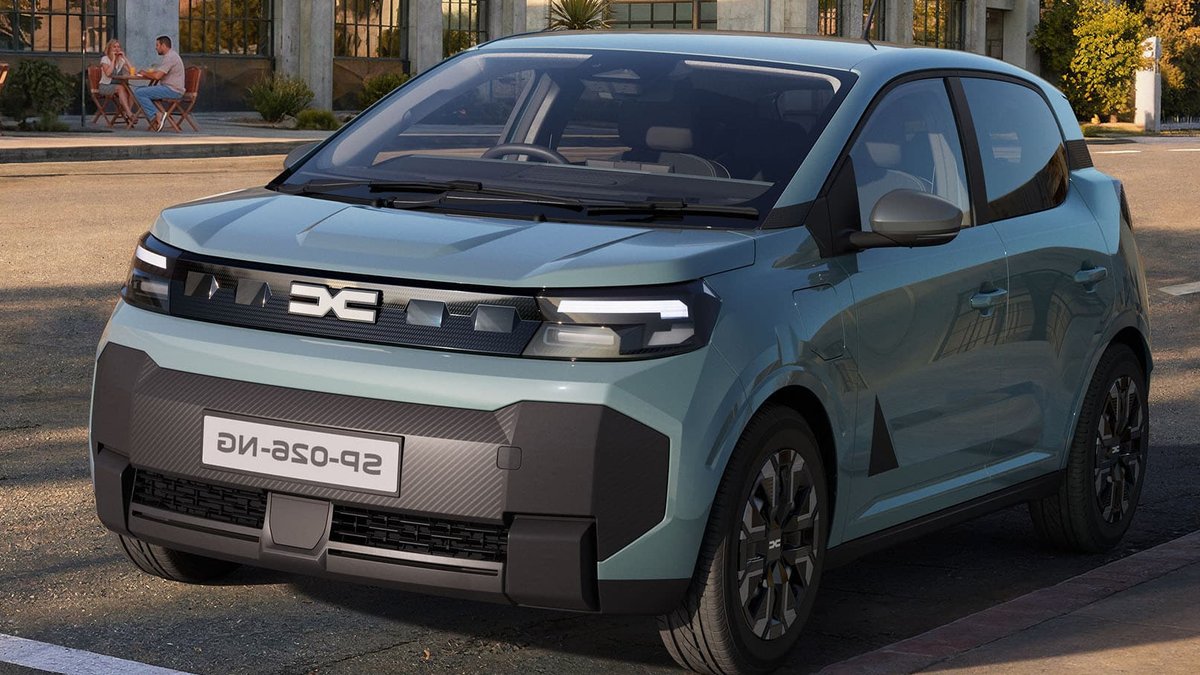
The new Dacia Spring, set to arrive in the UK in spring 2027, presents a dilemma for potential buyers. The current model starts at £11,990, making its limitations more forgivable. In contrast, the new Spring will be wider, roomier, and more powerful, with a expected price tag below £18,000.
The 2027 Spring will be built on Renault Group’s RG-EV Small platform and feature a 27.5kWh usable LFP battery, offering up to 155 miles of WLTP range. The extra space, better technology, and more mature engineering may justify the potential £5,000 to £6,000 price increase.
New Dacia Spring 2027: Specifications and Features
The new Spring’s specifications include a top speed of about 81mph, an 11kW AC plus 50kW DC fast-charge pack, and a width of 1.74 meters excluding mirrors. The car will be produced in Slovenia, unlike the current model which is built in China.
Dacia has sold over 210,000 first-generation Springs in more than 40 countries since 2021. Dacia’s connected vehicle data shows that the average first-generation Spring covers around 34km a day, with 75% of owners charging their cars at home.
Read Also: Skoda May Discontinue Superb Estate Model
The new Spring’s design has grown more mature, with a stronger horizontal and vertical structure, a higher and shorter bonnet, and more pronounced wheelarches. The car will be available in four colors: Agave, Schist Grey, Diamond Black, and Glacier White.
The price of the new Spring is an important factor, with Dacia UK anticipating that the entire range will cost less than £18,000 before any potential government subsidy. However, the final UK price list and complete UK trim breakdown have not been released yet.
The battery chemistry is widely used in lower-cost EVs, as it reduces dependence on nickel and cobalt and is well-suited for cars where cost, durability, and everyday charging matter more than long-distance range.
The Spring’s battery is deliberately modest, keeping the car from carrying unnecessary long-distance range. The trade-off is obvious: 155 miles is sufficient for local commuting but not generous for regular motorway work. Real-world range will be lower than the laboratory figure in certain conditions, such as cold weather or heavy loads.
For Dacia’s typical customer, the maths is more favorable, with an average daily distance of about 21 miles meaning a 155-mile official range represents several days of normal use. Dacia claims that one charge per week could be enough for many owners.
Read Also: ProLogium begins mass production of 381Wh/kg battery
Public rapid charging, on the other hand, can cost much more per kWh, making home or workplace charging an important aspect of the Spring’s value proposition.
The standard launch specification includes a 6.6kW AC onboard charger, with the fast-charge pack upgrading AC charging to 11kW and adding 50kW DC charging. On a suitable rapid charger, Dacia quotes 15 to 80% charging in 28 minutes.
The fast-charge pack’s availability and cost on the UK version are still unknown, which is an important consideration for buyers without dependable home charging. The Spring’s charging times and costs will be important considerations for potential owners, particularly those who plan to use the car for regular motorway trips.
Dacia’s decision to use a modest battery and focus on everyday charging is a deliberate choice, reflecting the company’s understanding of its typical customer’s needs. As the UK market for affordable electric cars continues to grow, the new Spring’s specifications and features will be closely scrutinized by buyers looking for a practical and cost-effective solution.