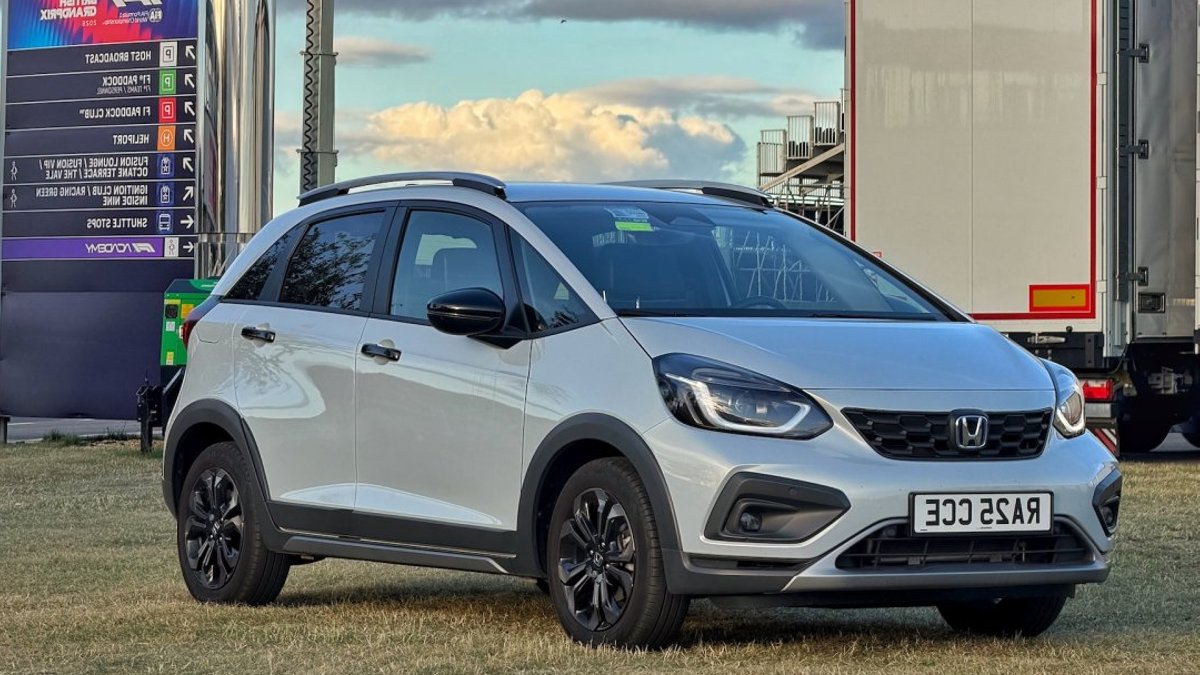
Say hello to the adorable, practical, and super fuel‑efficient Honda Jazz e:HEV.
New powertrain and size upgrades
The Jazz e:HEV pairs a 1.5‑liter four‑cylinder engine with a dual‑motor hybrid system, delivering 122 horsepower and 187 lb‑ft of torque. At 2,760 pounds, the Crosstar Advance trim is about 209 pounds heavier than the 2007 Fit it replaces, which weighed 2,551 pounds and produced 107 hp. Despite the extra mass, the added electric torque and wider track help the newer model maintain a lively feel on the road.
Interior layout and technology
Inside, the Jazz e:HEV sticks to a function‑first philosophy. A 9‑inch central touchscreen hosts media and navigation, while physical knobs and hard buttons control volume and climate settings. The digital gauge cluster is minimal, resembling a motorcycle display, but it provides the necessary information without distraction.
Seats are cloth with faux‑leather trim, heated, and manually adjustable, offering more comfort than the older Fit’s seating.
Related: Self Driving Cars Involved in Fewer Accidents
From a practical standpoint, the Jazz’s cabin feels airy, with large windows that grant excellent outward visibility. The layout allows for easy reach of controls, reducing the need to take eyes off the road. While the infotainment screen is modest, it does not dominate the dashboard, preserving a clean aesthetic.
Driving trends and fuel economy
Twisty country roads reveal the vehicle’s handling strengths. The hybrid’s electric torque provides a light boost when exiting corners, making throttle modulation feel more like an electric vehicle than a traditional gasoline car. The suspension is neither overly soft nor overly stiff, allowing confident cornering without excessive body roll.
Fuel efficiency stands out as the Jazz’s headline feature. After nearly 400 miles of mixed driving, the tank remained more than half full, suggesting that a 70‑30 % highway‑city split could approach the WLTP‑claimed 62 mpg, roughly 700 miles per tank. This performance highlights the hybrid’s advantage.
For people who rely on a reliable, economical daily driver, the model offers a compelling blend of space, efficiency, and modest performance. Its hybrid system reduces fuel stops, which can be a significant cost saver for commuters covering long distances. The roomy interior also means families or rideshare drivers can comfortably accommodate passengers and luggage without sacrificing mileage.
Related: Russell fights back as Antonelli leads in Austria
Pricing and market positioning
In the United Kingdom, the Crosstar Advance version carries a price tag of £31,795, or about $42,752. By comparison, a Honda Civic Sport e:HEV in the same market costs roughly $48,300. The Jazz’s pricing places it below the Civic hybrid, yet it remains more expensive than many conventional subcompact rivals, reflecting the premium attached to hybrid technology.
Honda’s own statements explain the Fit’s disappearance from the U.S. market in 2020, citing the rise of the HR‑V and Civic Hatchback as more profitable models. The larger dimensions and hybrid powertrain make the model a better fit for European and Asian markets, where hatchbacks retain popularity.
Overall, the Jazz e:HEV impresses.
The review was conducted using a five‑day loan of the vehicle provided by Honda.