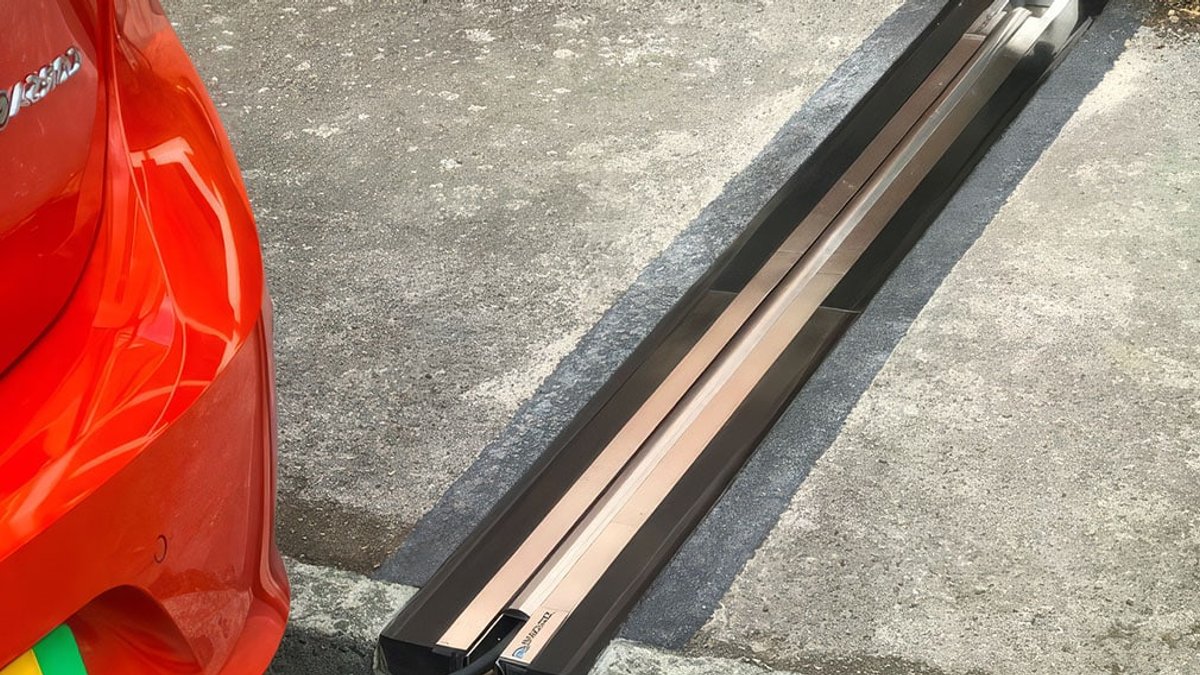
From 21 October 2026, new permitted development rights in England will make it easier for households without a driveway to charge their electric vehicles at home. The change removes the need for a separate planning application for qualifying cross-pavement EV charging channels and associated domestic chargepoints.
There are important conditions to note. The change does not give householders permission to cut into the pavement themselves, and it does not force councils to approve every installation. The highway authority still controls what goes into the public footway, and street works rules still apply.
The legal change is contained in The Town and Country Planning (General Permitted Development) (England) (Amendment) (No. 2) Order 2026, which comes into force on 21 October 2026. Until this change, households wanting a private chargepoint for a car parked on the road could face up to three separate permission hurdles: highway authority consent, planning permission, and street works permissions.
The new national permitted development right removes the ordinary planning application step for qualifying installations. However, the other permissions do not disappear, and the pavement remains public highway. Councils can still decide that a particular address is unsuitable for cross-pavement EV charging.
Cross-pavement EV charging: what’s changing
Potentially millions of households in England could benefit from cross-pavement EV charging. According to the English Housing Survey, about 8 million households in England, around 32%, do not have off-street parking. Of those, almost 4 million households, around 16% of all households, have what the survey calls adequate on-street parking.
The lack of a driveway is one of the main reasons otherwise suitable buyers hesitate over an electric vehicle. The new rules aim to address this issue by making it easier for households to install cross-pavement EV charging channels.
Department for Transport guidance describes two broad types of cross-pavement technology: a channel or gully embedded in the pavement, and systems where a cable is permanently routed below the pavement to a removable bollard, lance, or other connector near the kerb. The new Class F permitted development right is more specific, applying only to pavement-embedded cable channels.
Related Post: Land Rover GT tests brand identity with electric coupe
Councils may look to relevant comparative standards, including BS EN 124 and BS EN 1433, when considering the strength and skid resistance of cross-pavement charging equipment.
Local delivery of cross-pavement EV charging remains uneven, with some councils already having live schemes in place. Oxfordshire County Council, for example, has a live cable-channel scheme with an initial roll-out covering up to 500 installations. However, other councils, such as Somerset Council, are still working towards a controlled pilot in early 2027.
The new permitted development right does not apply in a conservation area, within the curtilage of a listed building, or within a scheduled monument site. Planning and heritage controls could still apply, and councils may consider various factors when evaluating an installation, including pedestrian accessibility and pavement width.
Installation and Maintenance
The cost of an EV cable gully can include the channel hardware, labor, street works licenses, reinstatement, inspection, maintenance, and sometimes insurance. The current Electric Vehicle Chargepoint Grant for Households with On-Street Parking covers 75% of the eligible cost of buying and installing the chargepoint, up to a maximum of £500 per socket, for qualifying households also installing a permanent cross-pavement solution.
Applicants must not install the chargepoint before OZEV confirms eligibility, and they must own or rent the home in which they live, have no private and exclusive off-street parking, and have adequate on-street parking. An OZEV-approved installer and eligible chargepoint are also required, and the household must obtain the required highway authority consent.
Official figures show that, by 1 July 2026, the on-street household chargepoint grant had funded only 59 sockets across the UK, including 31 in the previous 12 months. This highlights that the market for cross-pavement EV charging is still emerging, and many households may not yet have access to this technology.