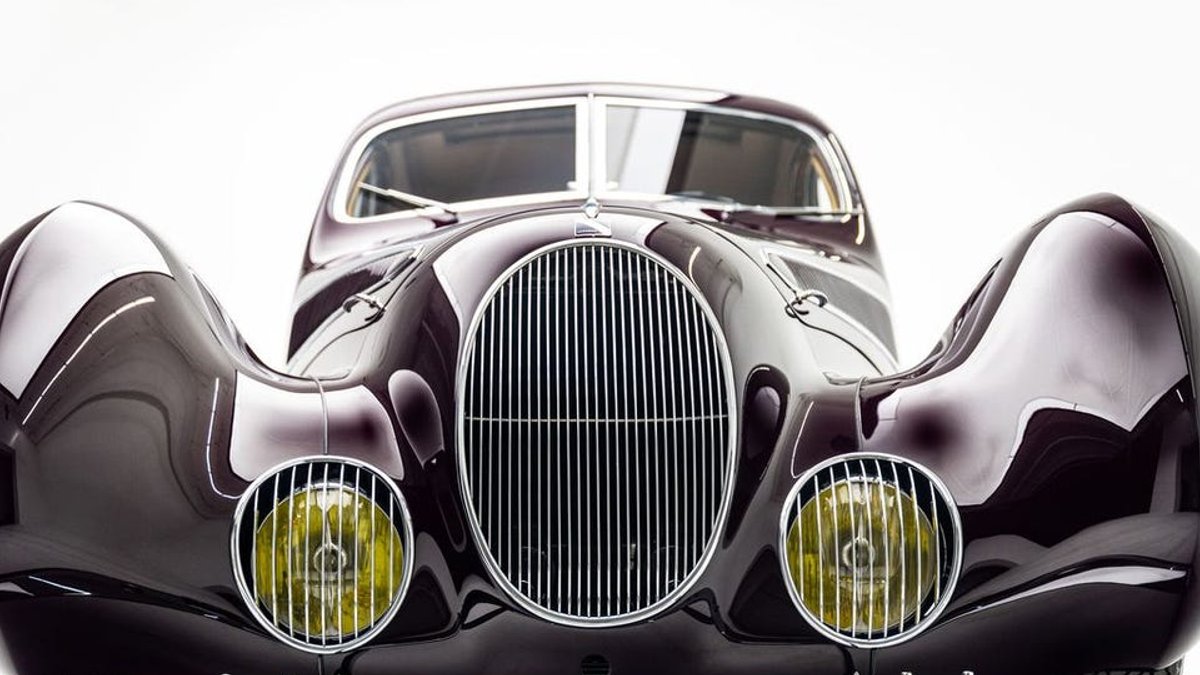
When the Petersen Automotive Museum opened its new Mullin Family Gallery this weekend, it marked the transfer of a sizable portion of Peter Mullin’s famed collection of pre‑war French automobiles to the museum’s Vault, ensuring the cars will remain publicly accessible after the closure of the Mullin Automotive Museum earlier this year.
From Private Collection to Public Display
Peter Mullin, who died at 82 on September 18, 2023, built his collection over nearly three decades, beginning with a 1937 Delahaye that sparked a lifelong passion. Together with his wife Merle, he amassed Delages, Talbot‑Lagos, Bugattis and Peugeots, restoring each vehicle with meticulous attention to original detail. The Mullin Automotive Museum, which opened in 2010 in Oxnard, California, offered visitors a glimpse of that era, often described as a step back to a 1930s Paris Motor Show before World War II.
“Together, we built this collection with the dream of preserving the extraordinary artistry, innovation and craftsmanship of French Art Deco automobiles,” Merle Mullin said at the unveiling. “It was equally important to us that these masterpieces would one day be shared with the broadest possible audience. Peter always believed the Petersen Automotive Museum was the right steward for that responsibility, and it is deeply meaningful to see that vision fulfilled.”
Related: Zenvo aims to make Aurora ultimate driver’s hypercar
Highlights of the Initial Installation
The first set of vehicles on display includes a 1922 Hispano‑Suiza Type H6B “Skiff Torpedo,” a 1926 Bugatti Type 37A, a 1926 Bugatti Type 50S by Million‑Guiet, three Voisins, a pair of 1937 Peugeots, a 1938 Delahaye Type 145 “V‑12 Coupe” by Henri Chapron, a 1939 Delahaye T‑165 V‑12 “World’s Fair,” a 1951 Bugatti Type 101C by Gangloff, and a 1951 Talbot‑Lago T26 Grand Sport by Stabilimenti Farina. The museum’s director called the donation “one of the most significant moments in the Petersen Automotive Museum’s history.”
In 2028, the Petersen plans a larger exhibition featuring about 30 selections from the Mullin collection, a component of the original donor’s long‑term strategy for the museum. “If you can dream,” Mullin was known to say, “you can make it happen,” a sentiment that continues to shape the museum’s upcoming programming.
For enthusiasts, the move means the vehicles will be housed in a climate‑controlled environment designed for long‑term preservation, while also allowing broader public access. The gallery’s layout follows a chronological approach, guiding visitors through the evolution of French automotive design from the early 1920s to the post‑war era. This arrangement helps illustrate how engineering advances and artistic trends intersected during a period of rapid change.
Related: Feds seize luxury cars in racketeering case
Visitors can now experience history firsthand.
While the Mullin Automotive Museum’s doors are now closed, the collection’s new home promises a stable future.